
Haworthia Care (Zebra Plant)

Haworthia and Haworthiopsis (zebra plant)
At a glance
| ☀️ Light | Bright indirect. Handles less light than most succulents. |
|---|---|
| 💧 Water | When the soil is completely dry. |
| 🪴 Soil | Gritty: our Arid Potting Mix. |
| 🌡️ Temp | 10–30°C. |
| 💨 Humidity | Dry is fine. |
| 🐾 Pets | Pet safe Non-toxic to cats and dogs. |
| 🌱 Care level | Beginner Pet safe Small spaces |
| 📏 Grows to | 5–15 cm. |
Haworthias are small, slow-growing succulents with striped, spiky or translucent-tipped rosettes. Unlike most succulents, they're happy with bright indirect light, which makes them ideal for windowsills, desks and offices. They're pet safe, too.
Light + placement
Bright, indirect light, or a little gentle morning sun. Strong afternoon sun can turn them red or brown. In low light the rosettes stretch and lose their tight shape.
Watering
Water thoroughly when the soil is completely dry, then let it drain. Overwatering causes rot at the base. Water less in summer and winter when growth slows.

Soil + repotting
A gritty, fast-draining mix like our Arid Potting Mix in a small pot with a drainage hole. Repot every 2–3 years, separating pups if you like.
Feeding + upkeep
Feeding: We feed with Kelpy, a gentle plant food made from BC kelp. Mix 1 teaspoon into 1 litre of water and use it every other time you water. Kelpy is gentle enough to use year-round. Our rule of thumb: if your plant is putting out new growth, even in winter, keep feeding. If it's resting, you'll be watering less, so it gets fed less too.
A light sprinkle of worm castings on top of the soil every few months gives it a slow, natural boost (keep it thin so the gritty mix still drains fast). Prefer a granular food? BIOS Natural Plant Food mixes into the top layer of soil (about 1 tablespoon per 6-inch pot) once a month while your plant is growing. A little white fuzz on the soil afterwards is normal; it's the helpful fungi at work.
Remove dry, papery lower leaves.
Pups
Haworthias make offsets (pups) around the base. When repotting, gently separate pups with a few roots and pot them on their own. See Propagation 101.
Common problems
| What you see | Likely cause | What to do |
|---|---|---|
| Soft, mushy base | Overwatering | Let it dry; repot in fresh gritty mix. |
| Leaves turning red or brown | Too much sun | Move to bright indirect light. |
| Stretched, loose rosette | Low light | Move closer to a window. |
| Shrivelled leaves | Thirsty | Water deeply. |
| Dry lower leaves | Normal ageing | Remove them gently. |
Varieties we carry
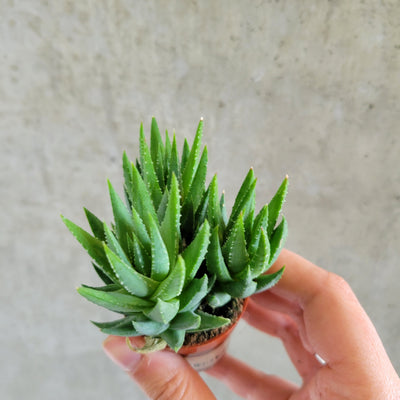
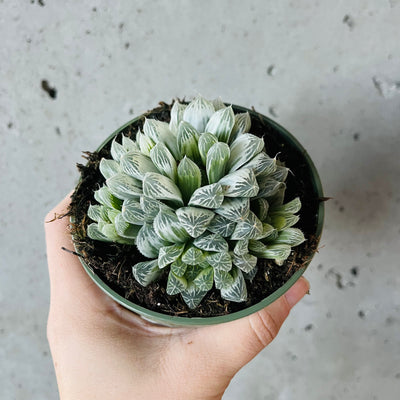
We carry assorted haworthias, from the classic zebra plant to collectors' types. Only what's in stock online right now is shown.
Frequently asked questions
Is haworthia safe for pets?
Yes. It's non-toxic to cats and dogs.
Can haworthia live without direct sun?
Yes. It's one of the few succulents happy in bright indirect light.
How often should I water it?
Only when the soil is completely dry, roughly every 2–4 weeks.
Is a zebra plant the same as haworthia?
Yes. The striped 'zebra plant' is a Haworthiopsis, a close relative.
Haworthia care kit
- Arid Potting Mix: Our fast-draining Soil Bar mix for plants that like to dry out.
- Squeezy Watering Bottle: Precise watering for small pots and terrariums.
- Kelpy Plant Growth Booster: Gentle BC kelp plant food you can use year-round.
- Worm Castings: A slow, natural boost from our Soil Bar. Top-dress every few months.
Bring your plant (or a photo) to 515 Chatham St #103 and we'll take a look. Open 11–5, 7 days a week, with street parking nearby. Get directions →
More plant care guides
String of Turtles · Maidenhair Fern · Philodendron Birkin · Bird's Nest Fern · String of Hearts · Spider Plant · Jade Plant · Lucky Bamboo · All plant care →